Fan Curb Damage
Exhaust fans vibrate on their curbs all day. The flashing at the base tears and lets rain run inside the curb, onto equipment below.
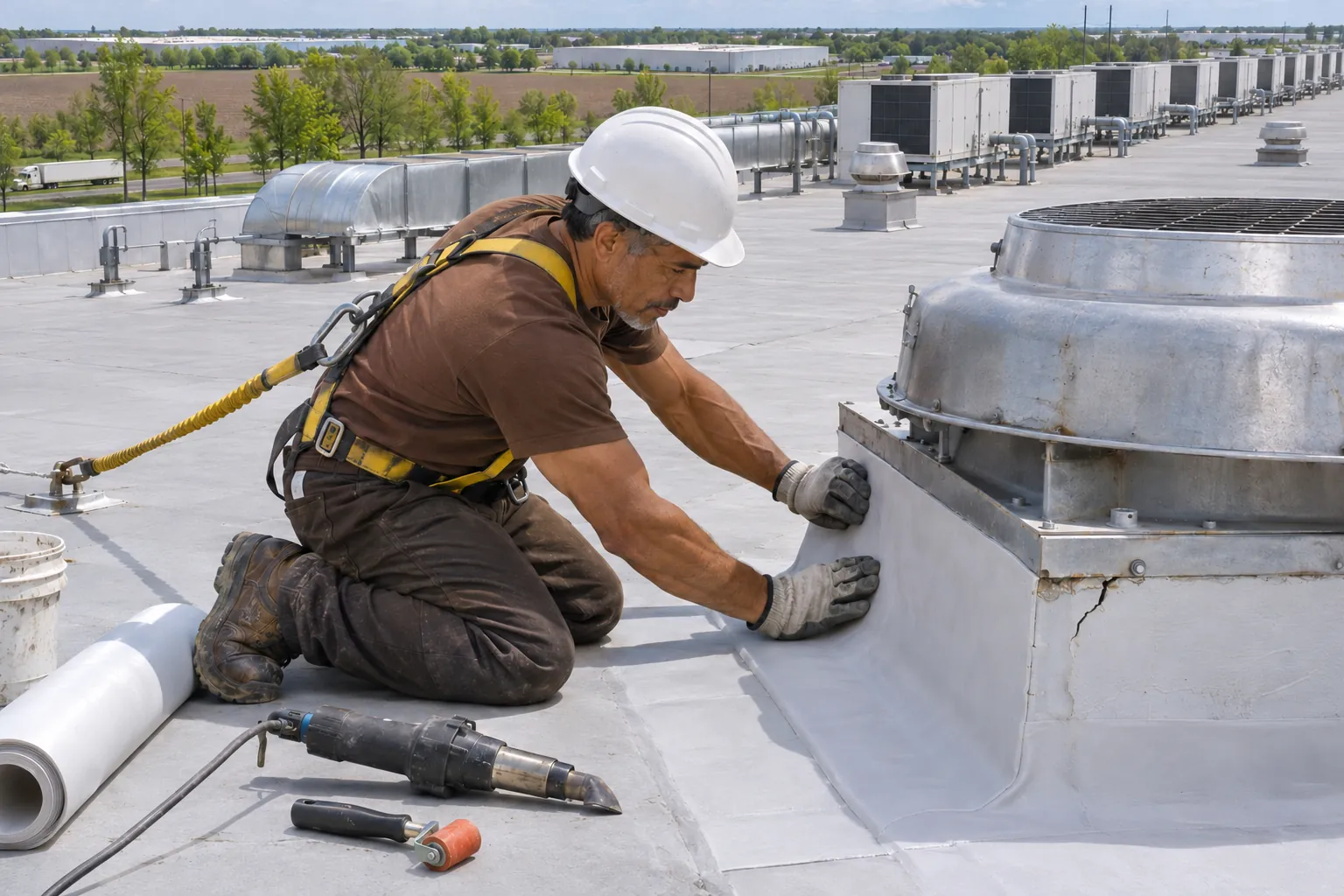
As a Plainfield industrial roof repair contractor, we fix plant roofs around fans, stacks, and process equipment without shutting lines down.
Plainfield industrial roof repair starts with what is running under the roof. This table shows how that shapes the work.
| Under The Roof | How We Plan | Protection Below |
|---|---|---|
| Active production line | Roof-side repair in a set window | Containment under any opened deck |
| Hot processes or ovens | Hot work permit from plant staff | Fire watch as the plant requires |
| Storage and racking | Material lifted away from aisles | Tarps over stock near the repair |
| Truck courts and docks | Lifts placed off active lanes | Cones around the lift zone |
Plant roofs wear in their own ways. These six come up again and again.
Exhaust fans vibrate on their curbs all day. The flashing at the base tears and lets rain run inside the curb, onto equipment below.
Stack discharge leaves grease or chemical film that softens some membranes and rusts steel around the stack.
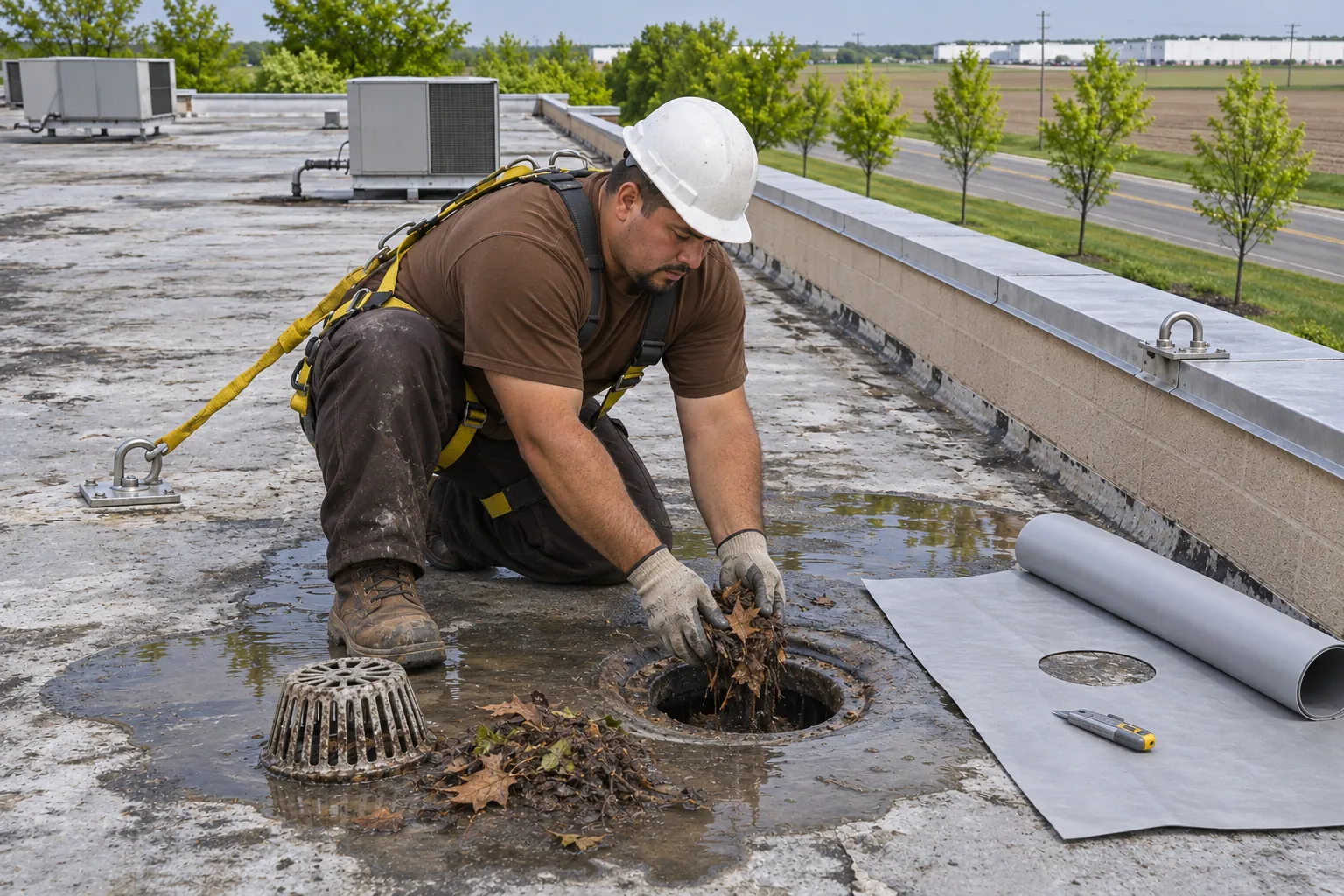
Process dust and debris collect at drains on big roofs, so water backs up across the field and soaks any weak lap.
Long-running leaks rust steel deck from the top down until it flexes underfoot near the equipment it supports.
Maintenance crews cross the roof to equipment every week, wearing paths through the membrane between the hatch and the fans.
Pipes, conduits, and ducts packed together leave gaps that standard flashing cannot close.
Plant roofs mix systems, so the method follows the material at each spot.
Torn flashing around fans and units is cut out and replaced with membrane that wraps the curb and seals under a counterflashing.
Rusted steel deck gets cut back to solid metal, new deck is fastened to the structure, and insulation and membrane are tied in.
Strainers, clamp rings, and cracked bowls are replaced, and overflow scuppers are checked at the same visit.
Worn paths to equipment get repaired and covered with walkway pads that take the foot traffic.
Each row pairs a plant roof failure with the repair that closes it.
Vibration splits flashing at fan bases and drips onto equipment.
Curbs get new wraparound flashing sealed under a counterflashing, with the fan locked out by plant staff during the work.
Rusted deck sags and lets the roof hold water above the floor.
Rusted sections are cut out and replaced, then insulated and covered.
Dust-clogged drains leave water standing across the roof.
Drains are cleared and rebuilt, and overflow scuppers reopened.
Weekly maintenance traffic wears through the membrane.
Paths are patched and covered with walkway pads.
Call and we will plan a temporary patch that holds until a repair window opens.
Plant work splits between the roof and coordination with the people running the floor.
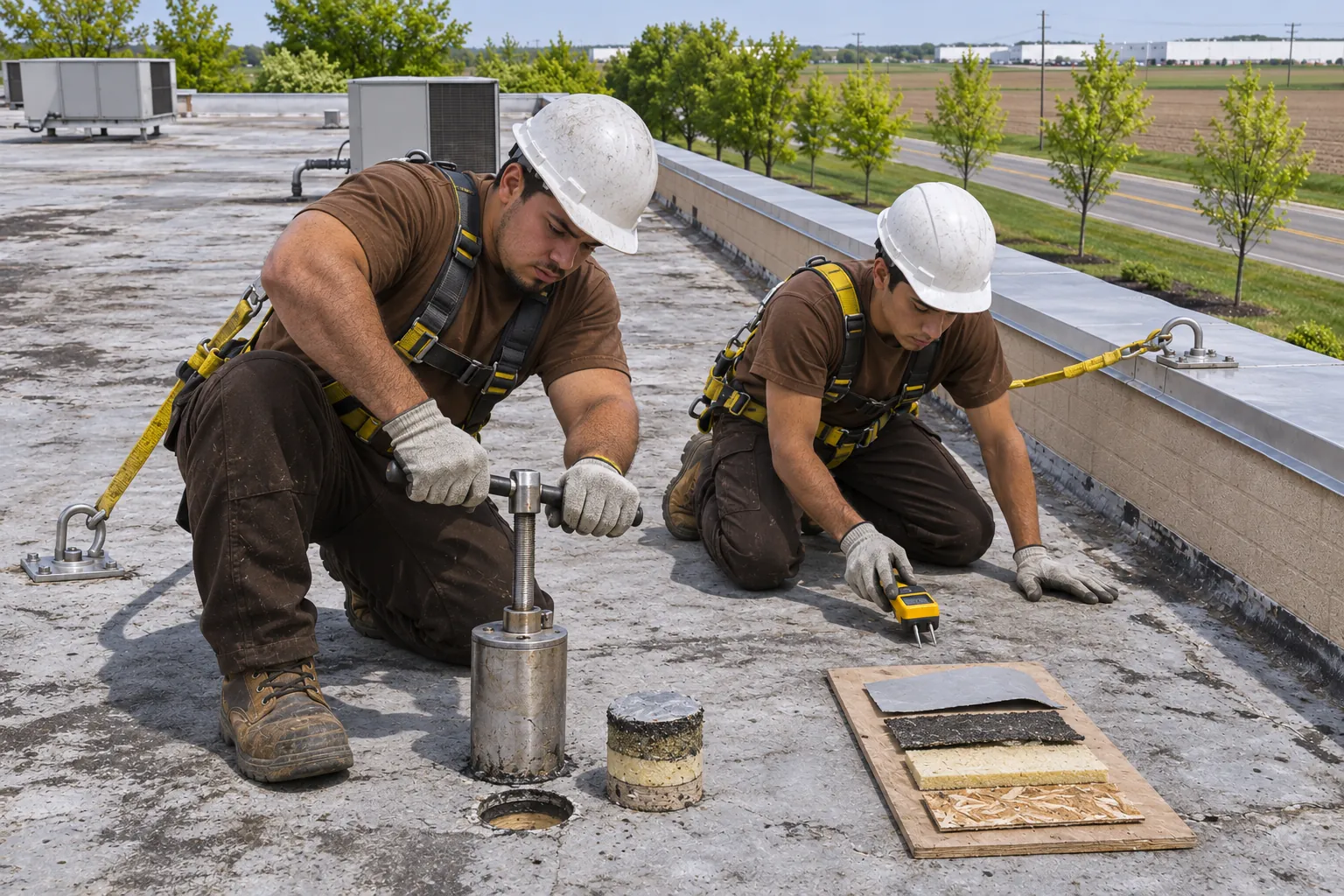
Before anything else, we review hot work rules, access times, lockouts, and which lines run below each roof area.
Curbs, stacks, drains, and deck get checked across the whole roof, with moisture readings and photos of every defect.
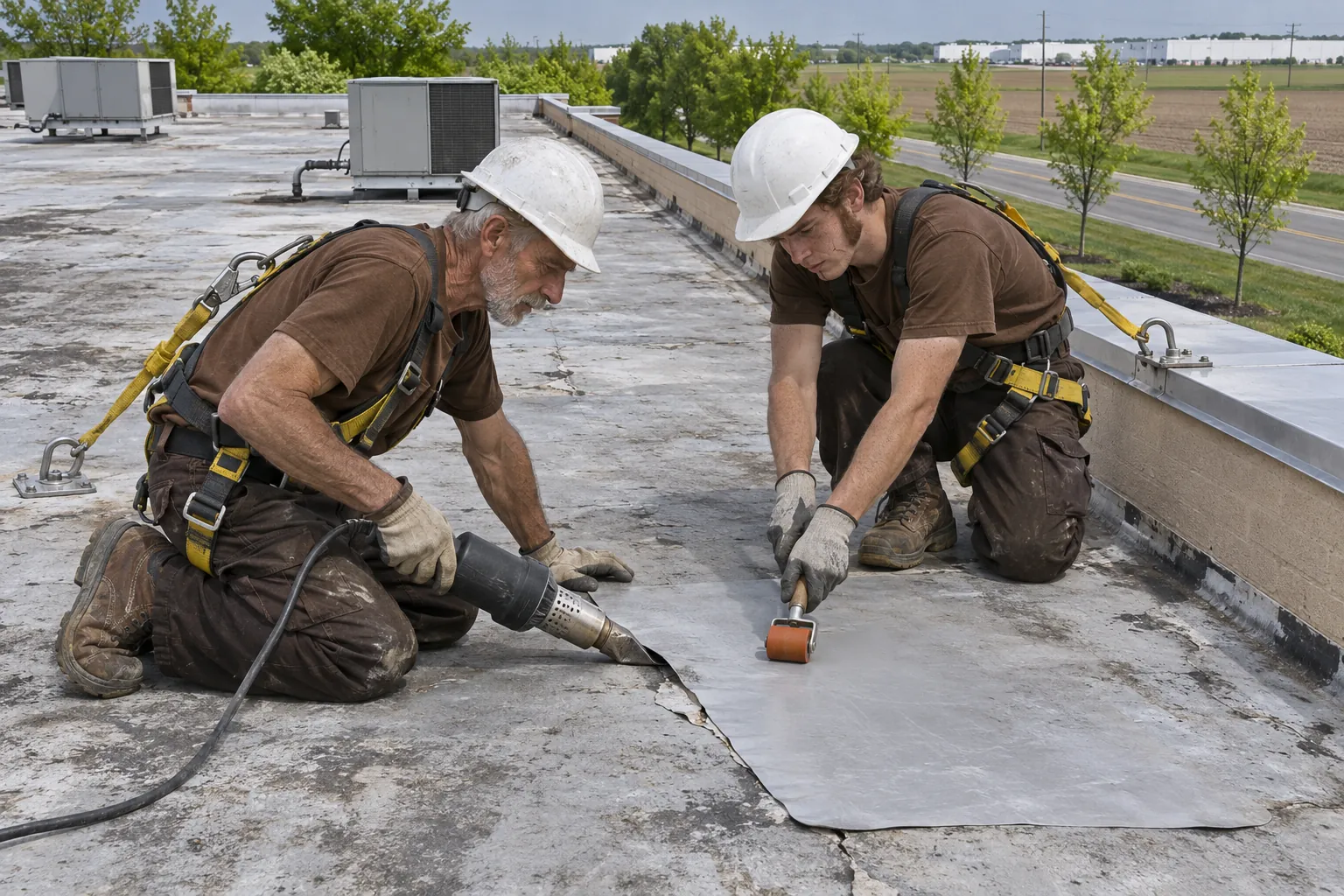
Repairs over active lines are booked for planned downtime or slow shifts, with materials staged ahead of the window.
Work happens from the roof surface, with containment below wherever the deck has to be opened.
Photos, a roof sketch marking each repair, and a written summary go to maintenance and safety staff.
Plants often include office wings and steel warehouse sections.
Membrane laps, drains, and blisters on low-slope roofs.
Typical Repairs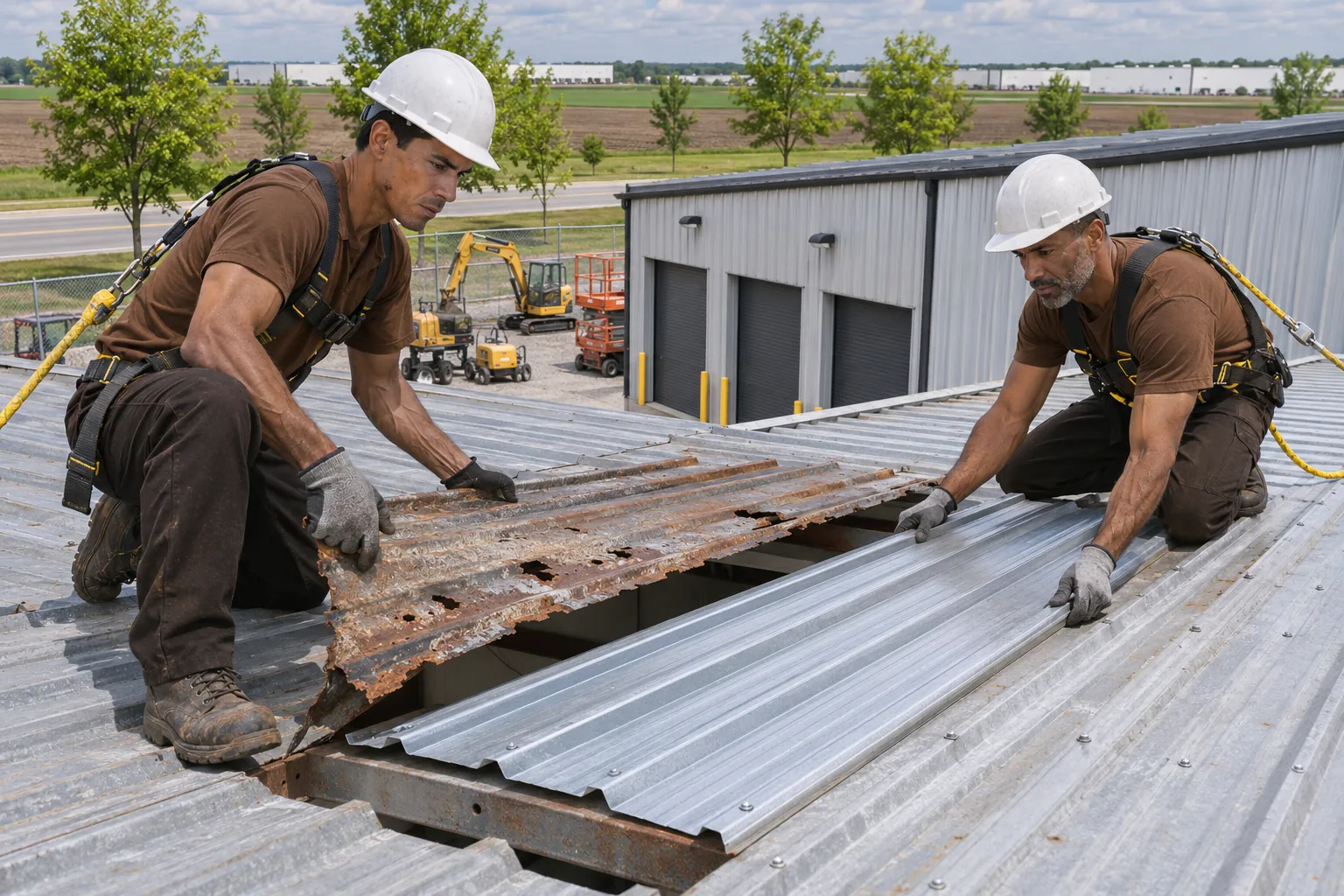
Fasteners, laps, rusted panels, and trim on steel roofs.
Typical Repairs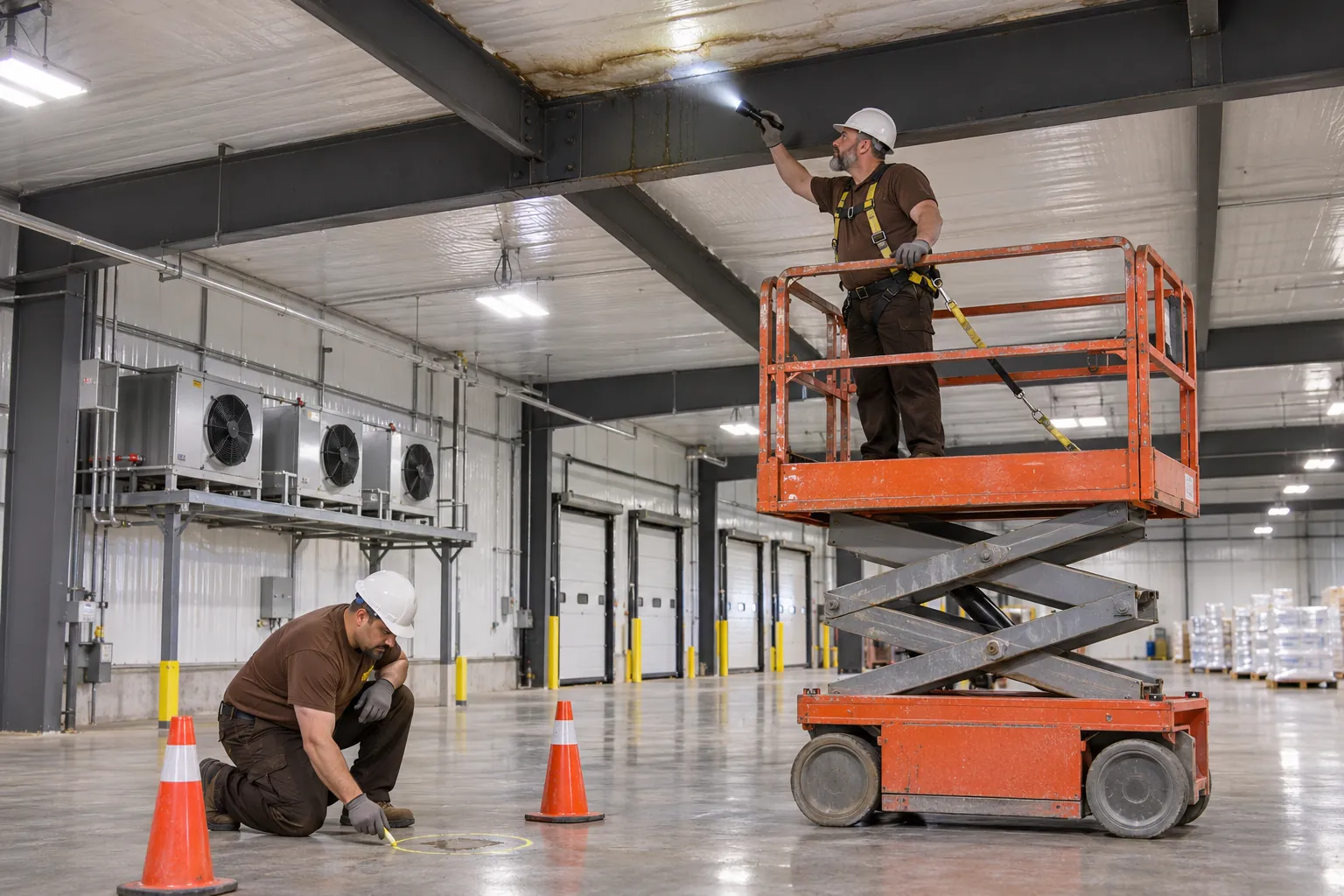
Tracing hidden leaks back to the opening.
Typical RepairsCost, choosing a roofer, production floors, drains, and deck.
Roof system, size of the damaged area, wet insulation, the number of curbs involved, exposure to heat or chemicals, access, and safety requirements. Protection over production lines adds cost too. An on-site estimate sets the price.
Look for a roofer that works inside plant safety programs, uses fall protection on large roofs, and repairs each system in its own material. We cover Hendricks, Morgan, and Putnam counties.
Most work stays on the roof surface so nothing reaches the floor. Where deck has to open, containment goes up below and the timing is set with plant safety staff.
Debris comes out, broken strainers and clamp rings are replaced, membrane is resealed to the bowl, and cracked bowls are fixed. High drains can get a sump or tapered board.
Yes. Damaged deck is cut out and new deck is fastened to the structure, then insulation and membrane are tied in. Larger areas are reviewed with you before work continues.
Repairs near hot stacks use materials rated for the heat and follow your hot work permit. Some stacks need a cool-down window first.
Walkway pads go on wherever maintenance staff walk to equipment. They protect the membrane from boots, tools, and dropped parts.
Photos of each repair, a sketch of the roof showing where the work happened, and notes on anything we saw that needs attention later, such as a fan curb that is starting to loosen.
Tell us about the plant and the leak, and we will plan an inspection around your shifts.