Split Field Laps
Cold snaps shrink membrane and pull at its welds or tape. A lap that opens even a finger width lets water run sideways under the sheet.
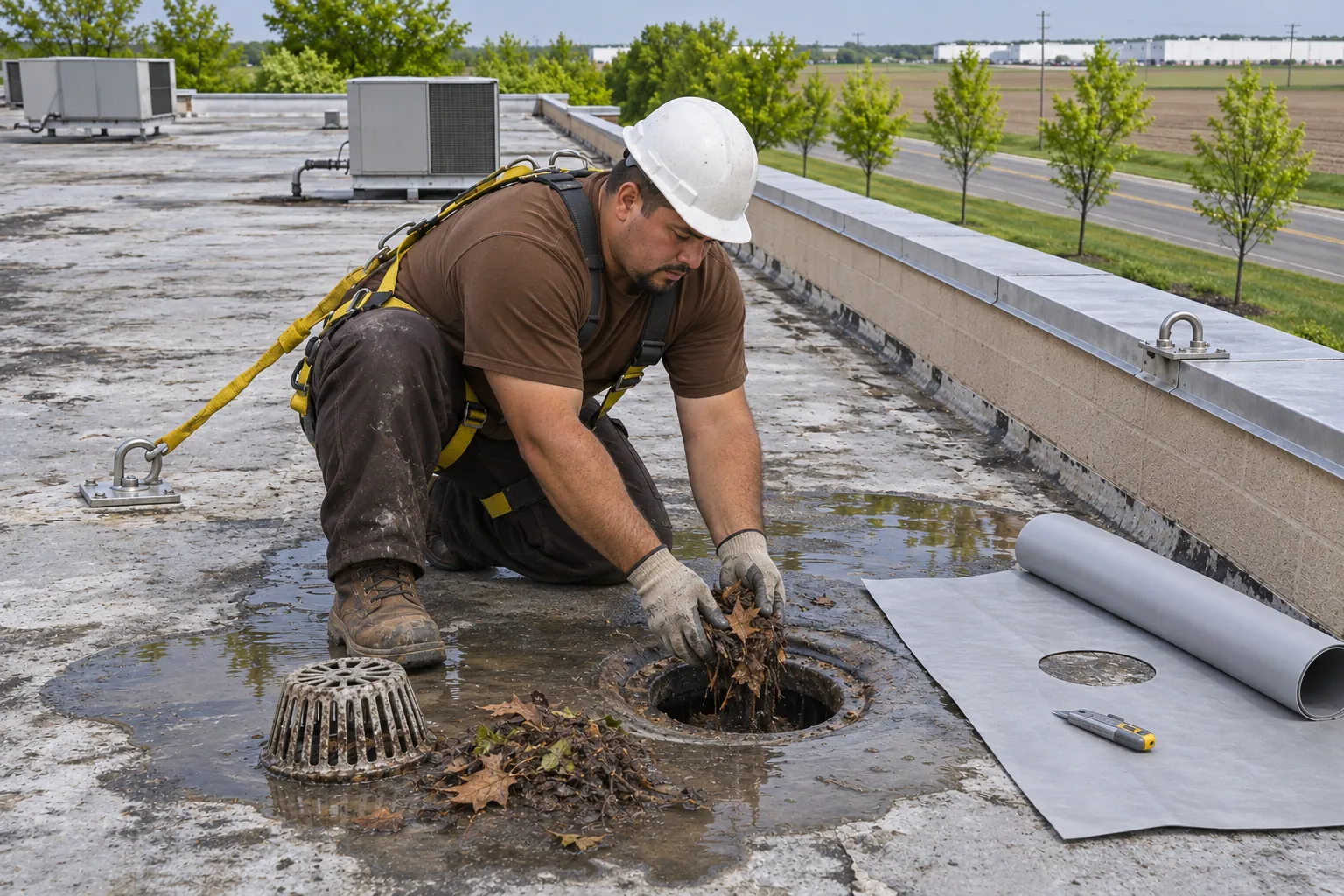
As a Plainfield flat roof repair contractor, we fix TPO, EPDM, and modified bitumen roofs on warehouses, offices, and terminals.
Plainfield flat roof repair makes sense while the membrane still flexes and wet spots stay small. This table shows where the line falls.
| What We Find | Repair The Roof | Plan A New Roof |
|---|---|---|
| Membrane flexibility | Bends without cracking | Cracks when folded |
| Wet insulation | A few patches near drains or curbs | Readings wet across large areas |
| Seams | Isolated open laps | Laps failing along whole runs |
| Ponding | One or two low spots | Water across most of the field |
Six conditions bring most low-slope roofs to us. Each one shows up in a different spot on the roof.
Cold snaps shrink membrane and pull at its welds or tape. A lap that opens even a finger width lets water run sideways under the sheet.
Leaves from nearby tree lines and grit off the gravel lots clog strainers. Water then stands at the drain and creeps under the clamp.
Sagging deck or crushed board leaves puddles that outlast the rain by days. The membrane under them wears faster than the rest.
Trapped moisture lifts the membrane into soft bubbles. Foot traffic breaks them open, and rain gets straight into the board.
Where the roof turns up a parapet, adhesive lets go and the flashing sags. Wind then drives rain behind it.
Service techs walking to rooftop units grind through the top layer of the membrane. Bare spots crack and start to leak.
The repair method follows the membrane and the damage we find under it.
TPO laps and punctures get a patch of new TPO, cleaned, primed where needed, and welded with a hand welder along every edge.
EPDM takes seam tape and cover strips after the rubber is scrubbed and primed. Laps are rolled down so they bond across their full width.
Soaked insulation gets cut out in a clean square, new board goes in at the same height, and membrane is tied in over the top.
Drains get new strainers and clamp rings, and low spots around them can get tapered board so water reaches the bowl.
Each failure below has a matching repair that closes it at the source.
A separated lap channels water into the insulation, far from where it entered.
New cover strips or welded patches span the lap, extending past the open section on both ends.
Puddles soften the surface, hold dirt, and hide pinholes until the ceiling stains.
Drains get cleared and reset, and tapered board or a cricket moves water toward them.
Cracked bubbles open straight into the board and spread moisture under the sheet.
Blisters are cut open, dried, and sealed under a patch once we confirm the board around them is dry.
Flashing that pulls off a parapet lets wind push rain down behind it.
Flashing is readhered or replaced and capped with a termination bar fastened along the wall.
Clearing a drain is often the first repair a flat roof needs. Call and we will schedule a look.
The order below keeps us from sealing water into the roof.
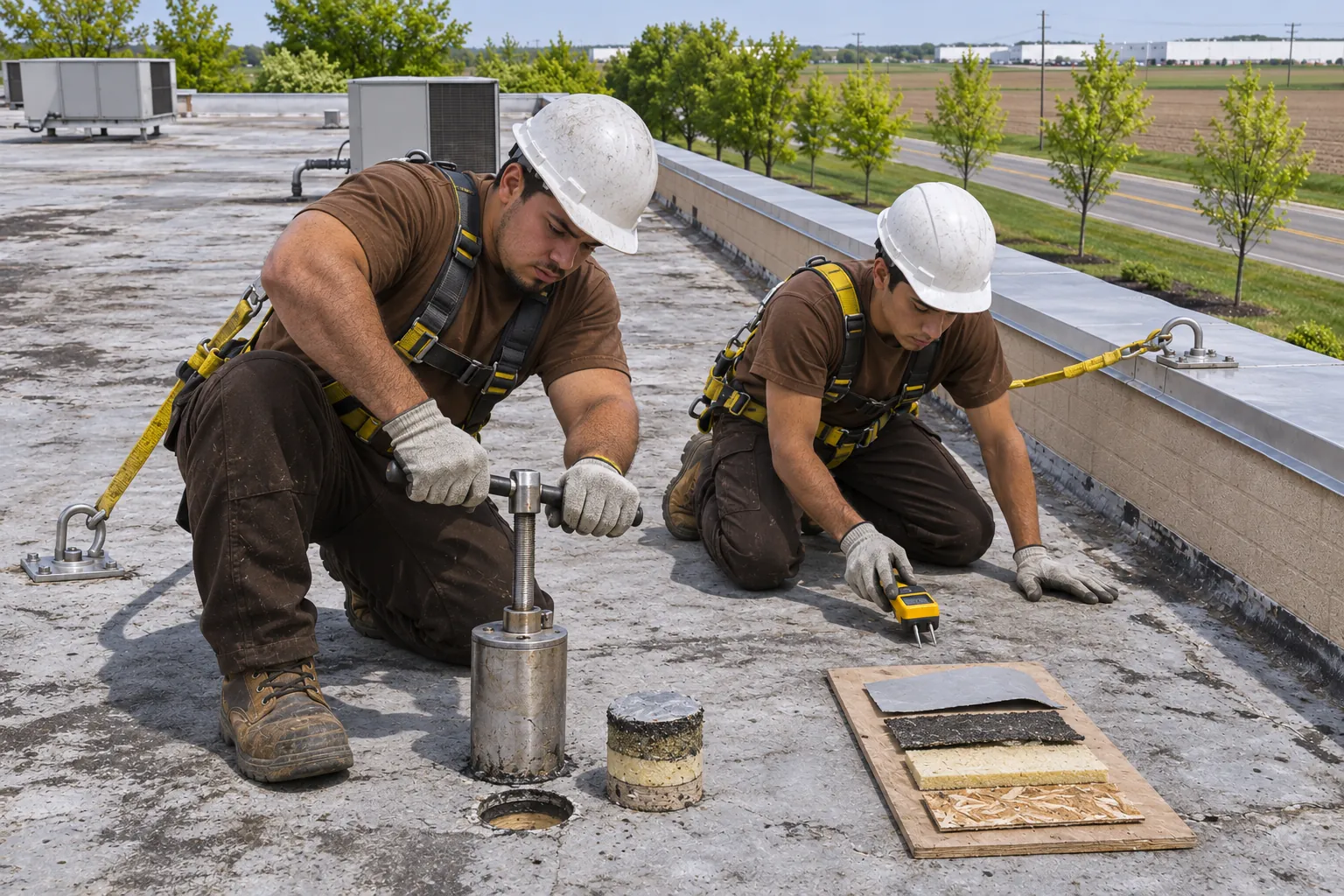
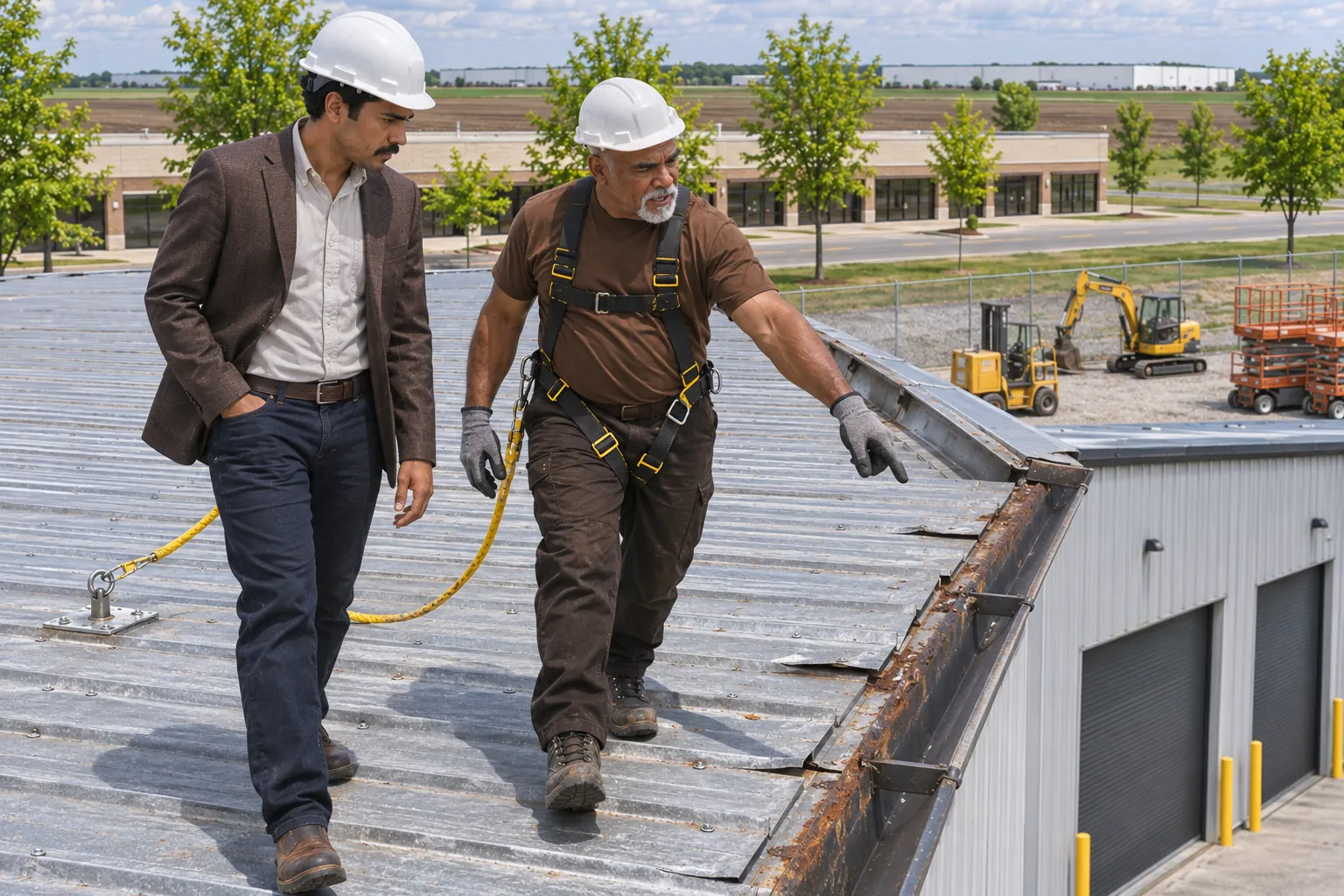
Inside, we note each stain and drip so the roof work starts above the right bay or room.
A moisture meter and, where needed, a small core show how far water has spread into the insulation.
Soaked board and damaged membrane come out in clean squares so the patch has firm edges to bond to.
New board, then matching membrane, welded or taped with laps that reach well past the cut.
Ceilings under the repair get a look after the next storm, and you receive the photo record.
Many flat roofs share a building with steel sections or plant equipment.
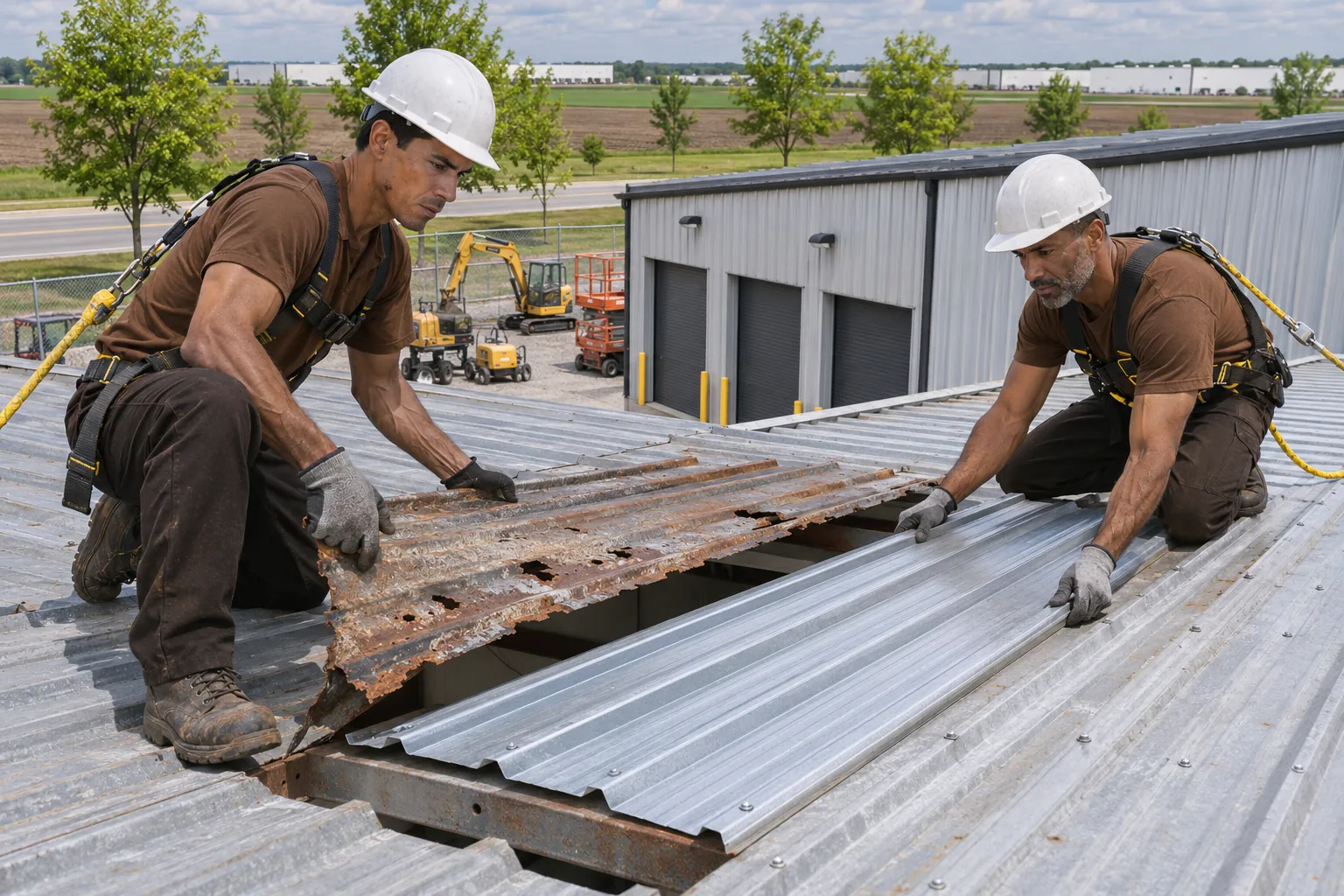
Fasteners, laps, rusted panels, and trim on steel roofs.
Typical Repairs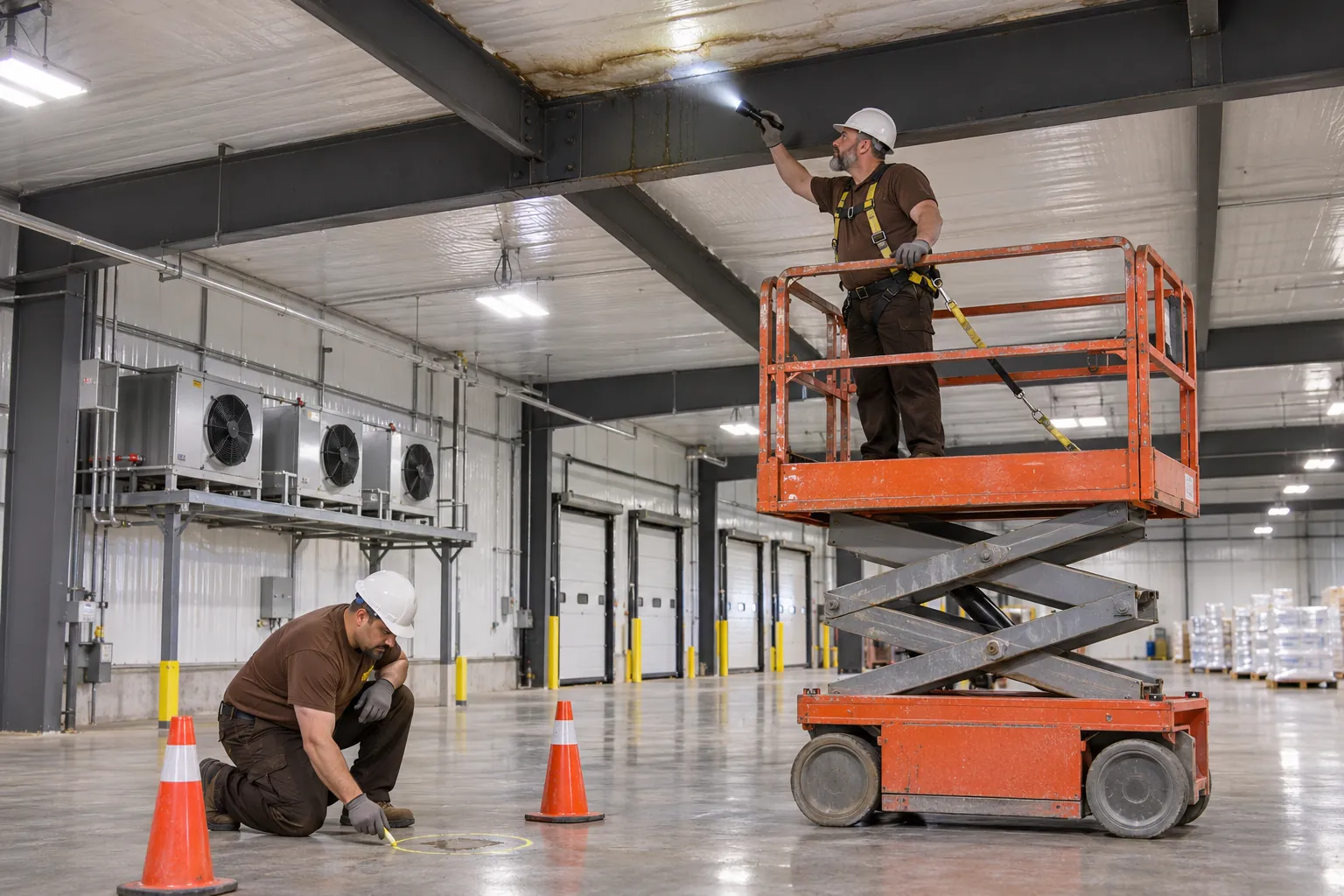
Tracing hidden leaks back to the opening.
Typical Repairs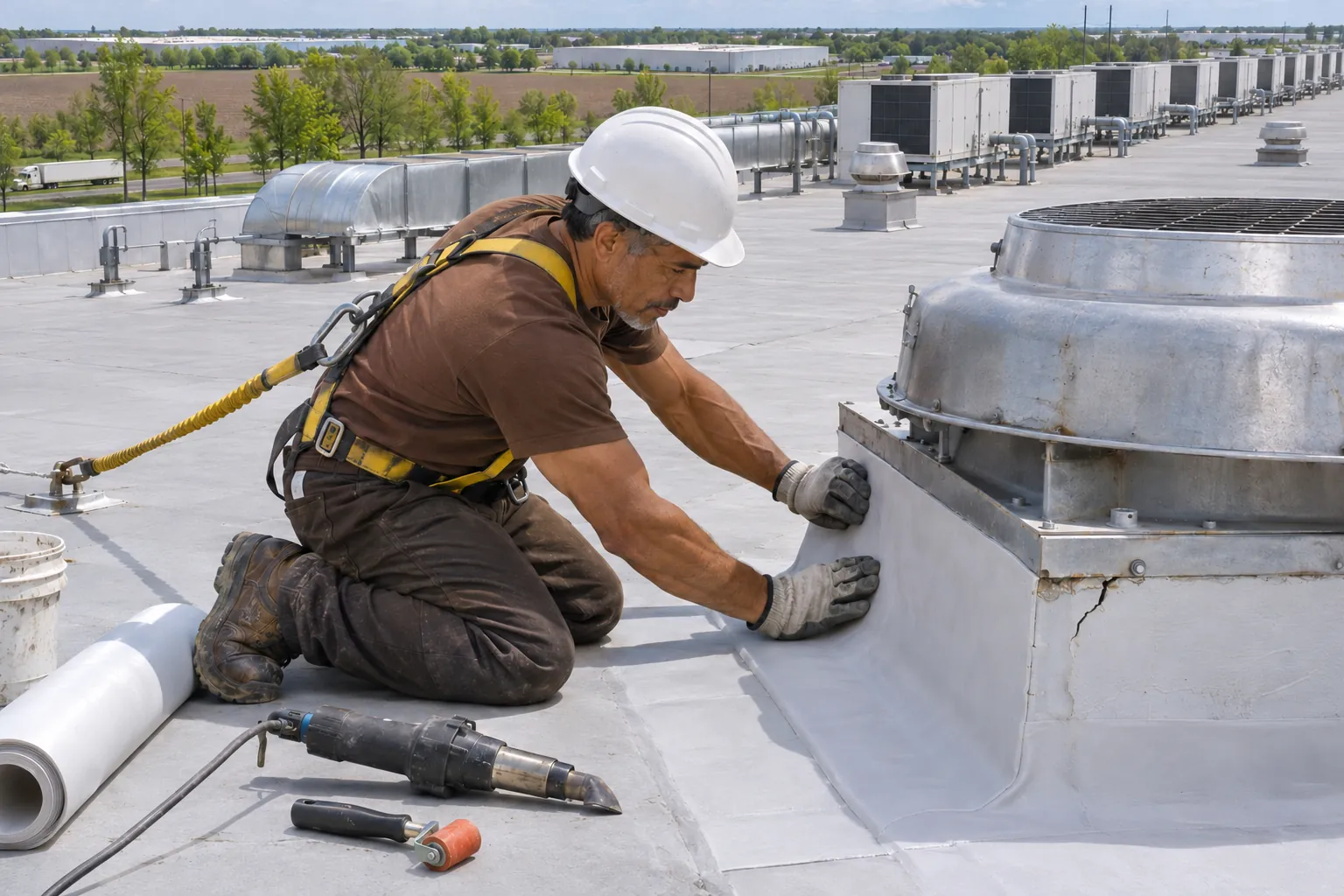
Curbs, drains, and decks on plant roofs.
Typical RepairsCost, methods, blisters, cold weather, and ponding.
Price depends on the membrane, the size of the damage, how much board is wet, and the drain or flashing work involved. One open lap is a small job; a wet section of insulation is larger. We price it after an inspection.
Remove the wet board first. Patching over it traps water that keeps spreading. We cut back to dry material, set new board, and weld or tape in matching membrane with wide laps.
Intact blisters that are holding steady get watched. Cracked ones, or any in a walkway, are cut, dried, and patched. When blisters appear across the roof, we check the insulation for trapped moisture first.
Many repairs go ahead in cold weather. Temporary patches stop active leaks, and TPO welds with adjusted heat. Adhesives and primers need milder days, so some permanent work waits for warmer weather.
High-set drains, deflected deck between joists, and crushed board along walkways leave low spots. We reset drains and add tapered insulation or crickets so water flows off.
Inside patches catch water but never stop it. The opening is on the roof surface, so the repair has to go there, after any wet insulation is removed.
Send us the address and what the membrane looks like, and we will set up an inspection.