Loose Fasteners
Steel grows and shrinks every day, which backs screws out over the years. A loose screw leaves an oversized hole and a washer that no longer seals.
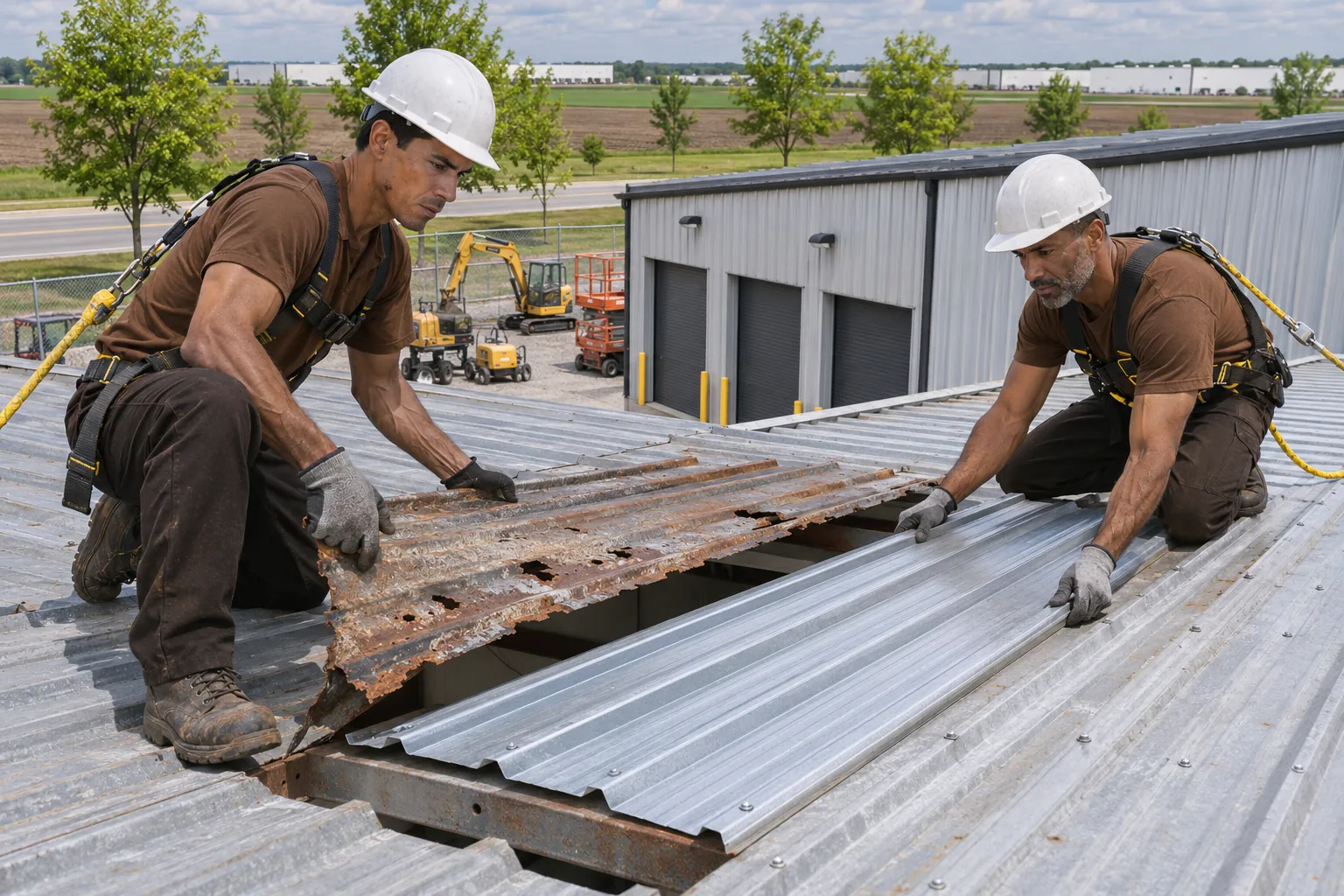
As a Plainfield commercial metal roof repair contractor, we fix steel roofs on terminals, shops, and metal buildings, panel by panel.
Plainfield commercial metal roof repair works while rust stays in a few places and the framing stays straight. Here is how we tell.
| What We Find | Repair The Panels | Plan A New Roof |
|---|---|---|
| Rust | At a few ends, laps, or screws | Holes through panels across the roof |
| Fasteners | Some loose or stripped | Most washers cracked or missing |
| Framing | Purlins straight and solid | Sagging or rusted purlins |
| Leaks | At laps, trim, or curbs | Through the field after every storm |
Steel roofs leak in predictable places. These six account for most of the calls.
Steel grows and shrinks every day, which backs screws out over the years. A loose screw leaves an oversized hole and a washer that no longer seals.
Sealant tape between panels dries and shrinks. Wind-driven rain then runs sideways along the rib and drips inside.
Debris holds water at eaves and end laps, so the bottom foot of the panel rusts first and eventually holes through.
Sun turns clear panels brittle, and hail or foot traffic cracks them. Rain drops straight through the crack.
Ridge caps, rake trim, and wall flashing loosen in storms. Gaps at their ends let water behind the panels.
Boots crack and curb flashing loosens where vents and units pass through the steel.
Every repair uses parts made for the panel profile on your roof.
Stripped screws give way to oversized fasteners with new sealing washers, driven to the right depth so the washer seals without splitting.
Old sealant gets cleaned out, fresh butyl tape goes between the panels, and stitch screws pull the lap tight.
Rusted panels come off and new ones in the matching rib and gauge go on, lapped and fastened the way the original was.
Ridge, eave, rake, and wall trim gets rebuilt with new closures and sealant so water sheds over the panels.
Each row pairs a steel roof failure with the repair that closes it.
Backed-out screws and cracked washers let rain drip along the purlins.
Oversized fasteners with new washers fill the hole and seal against the panel.
Panel ends rusted through drip into the wall line and stain stock below.
Those panels are replaced in the same profile, with new closures at the eave.
Shrunken tape opens the side laps to wind-driven rain.
Laps are cleaned, retaped, and stitched closed along their full length.
Cracked skylight panels let rain fall straight onto the floor.
Skylights are replaced with panels of the same profile or closed in with steel.
Surface rust is cheaper to stop than a rusted-out panel. Call and we will check how far it has gone.
Steel work moves panel run by panel run, with the building below kept dry.
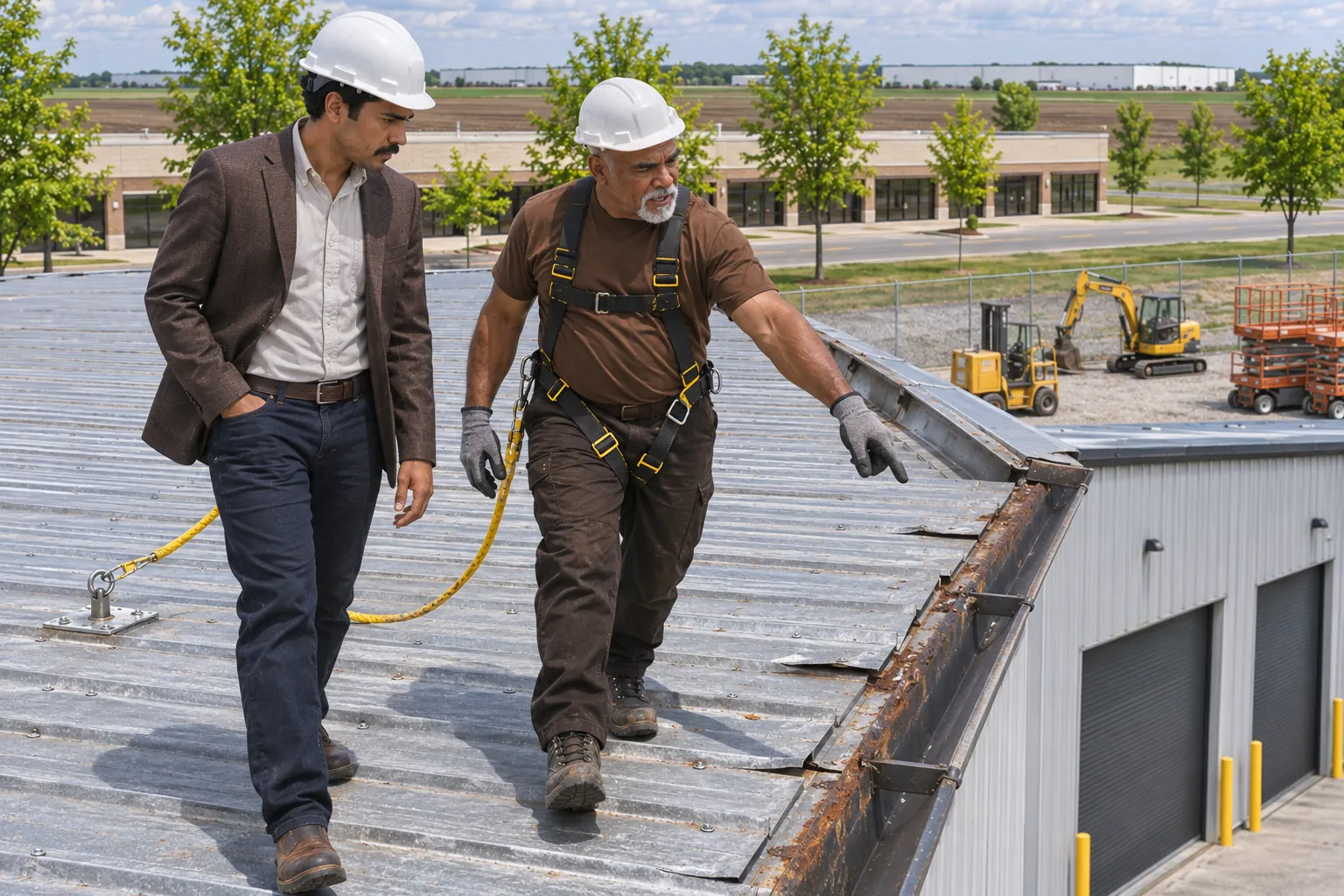
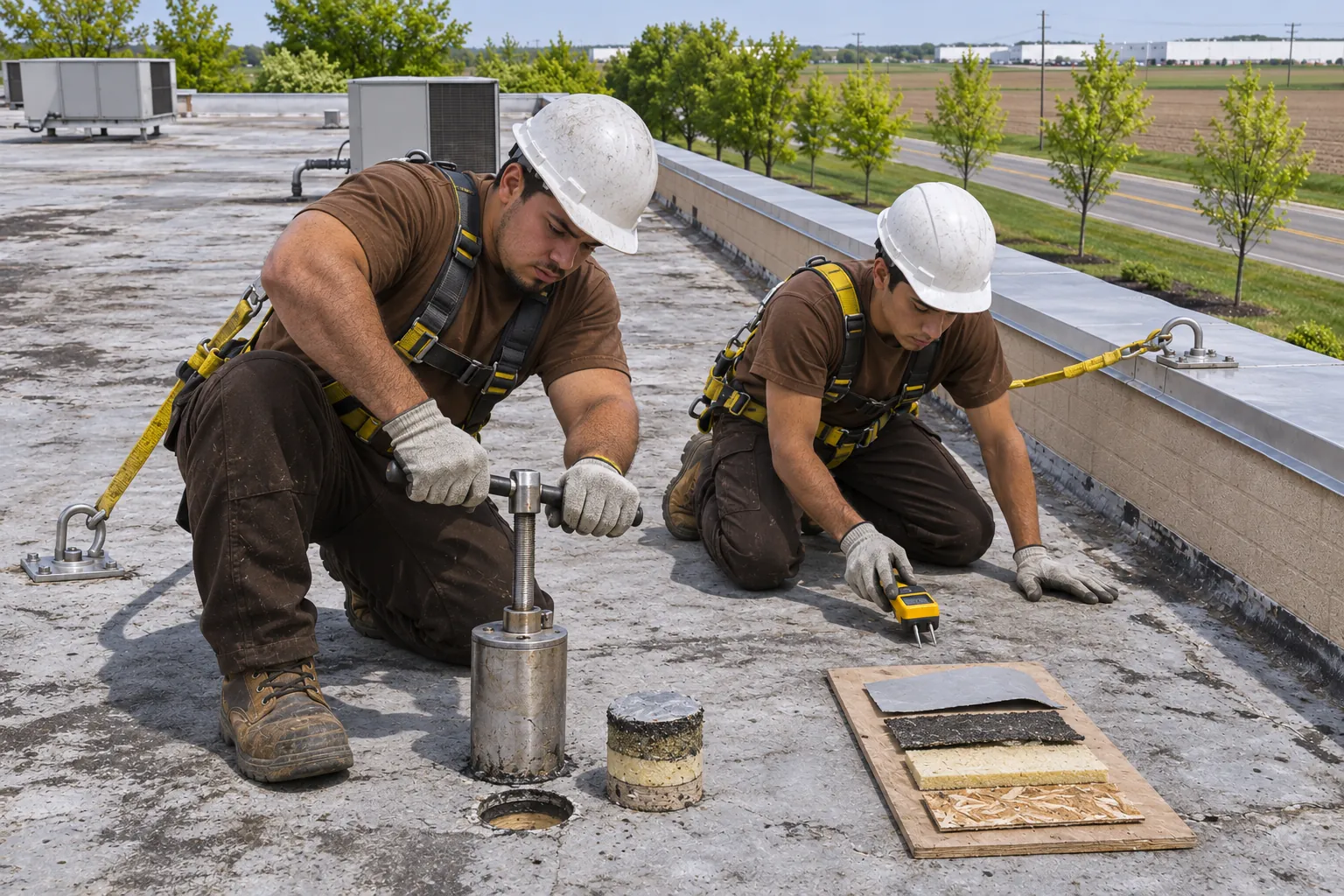
From inside, we note where water drips along purlins so we know which panel runs to open up first.
Each run gets checked for loose screws, cracked washers, and rust at the laps.
Matching panels, closures, and fasteners are ordered and staged where they will not block your doors.
Rusted panels come out, new ones go in, and laps and fasteners are sealed as each run is finished.
Every repaired run is photographed so you have a record of what changed.
Metal buildings often have low-slope offices or plant equipment attached.
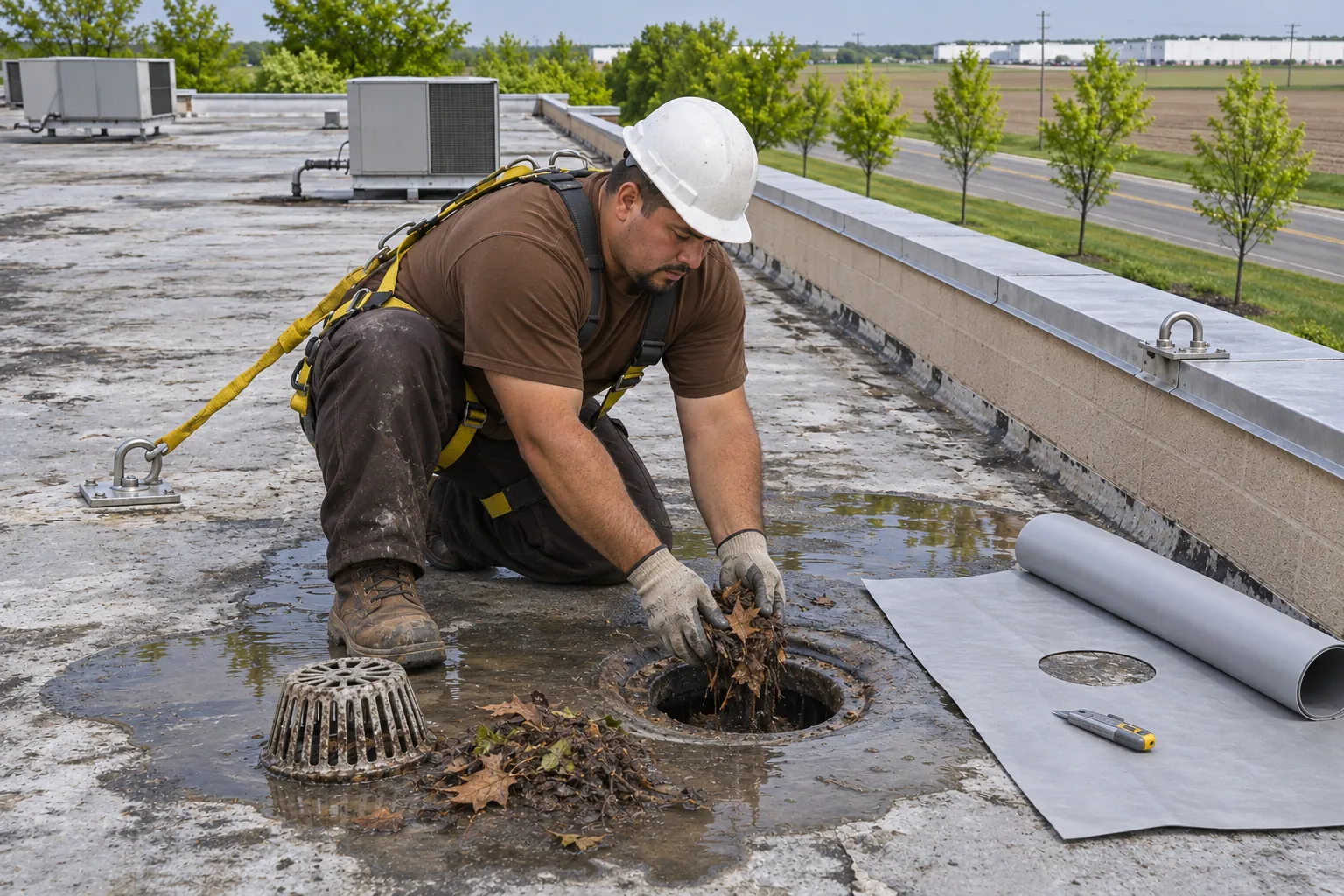
Membrane laps, drains, and blisters on low-slope roofs.
Typical Repairs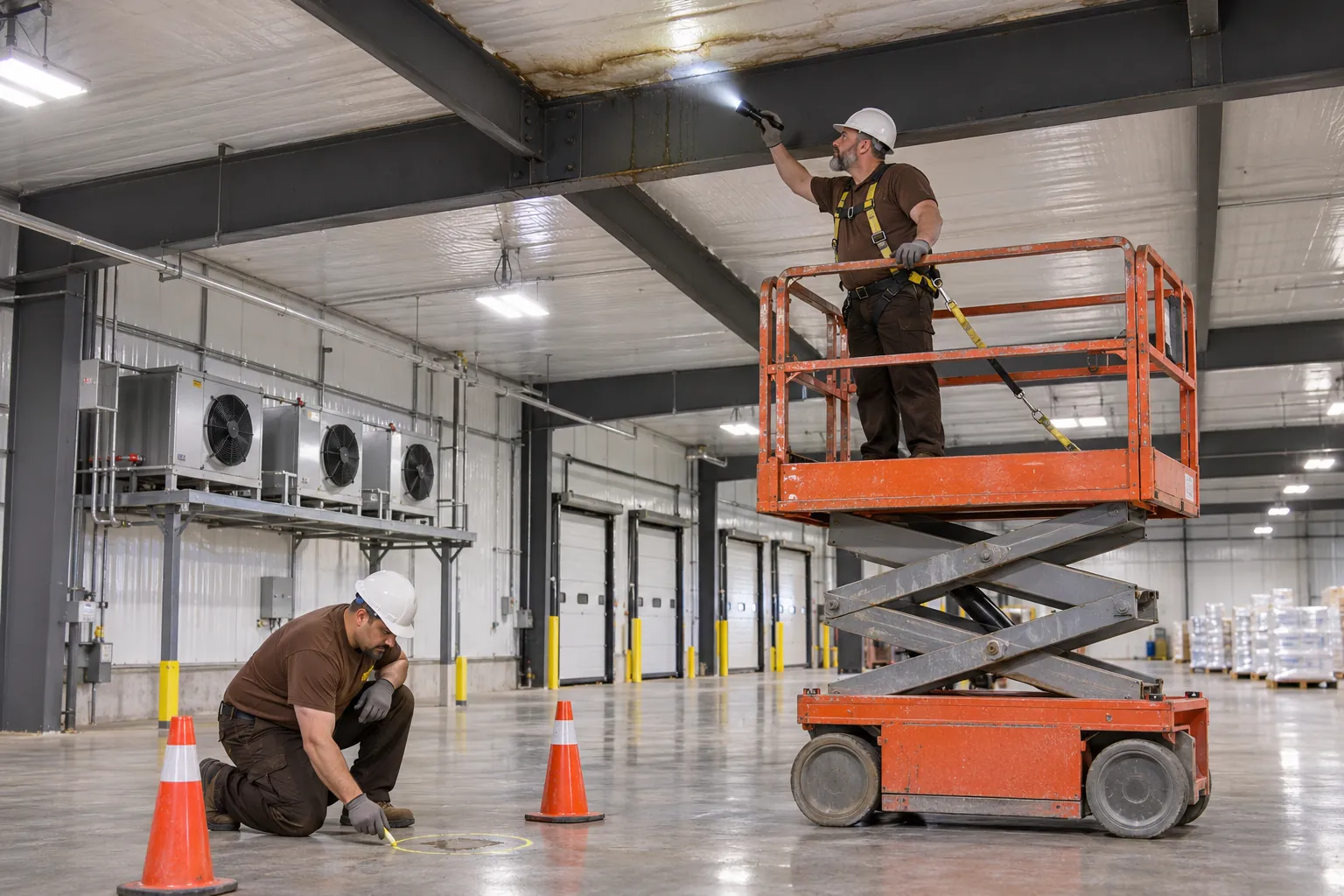
Tracing hidden leaks back to the opening.
Typical Repairs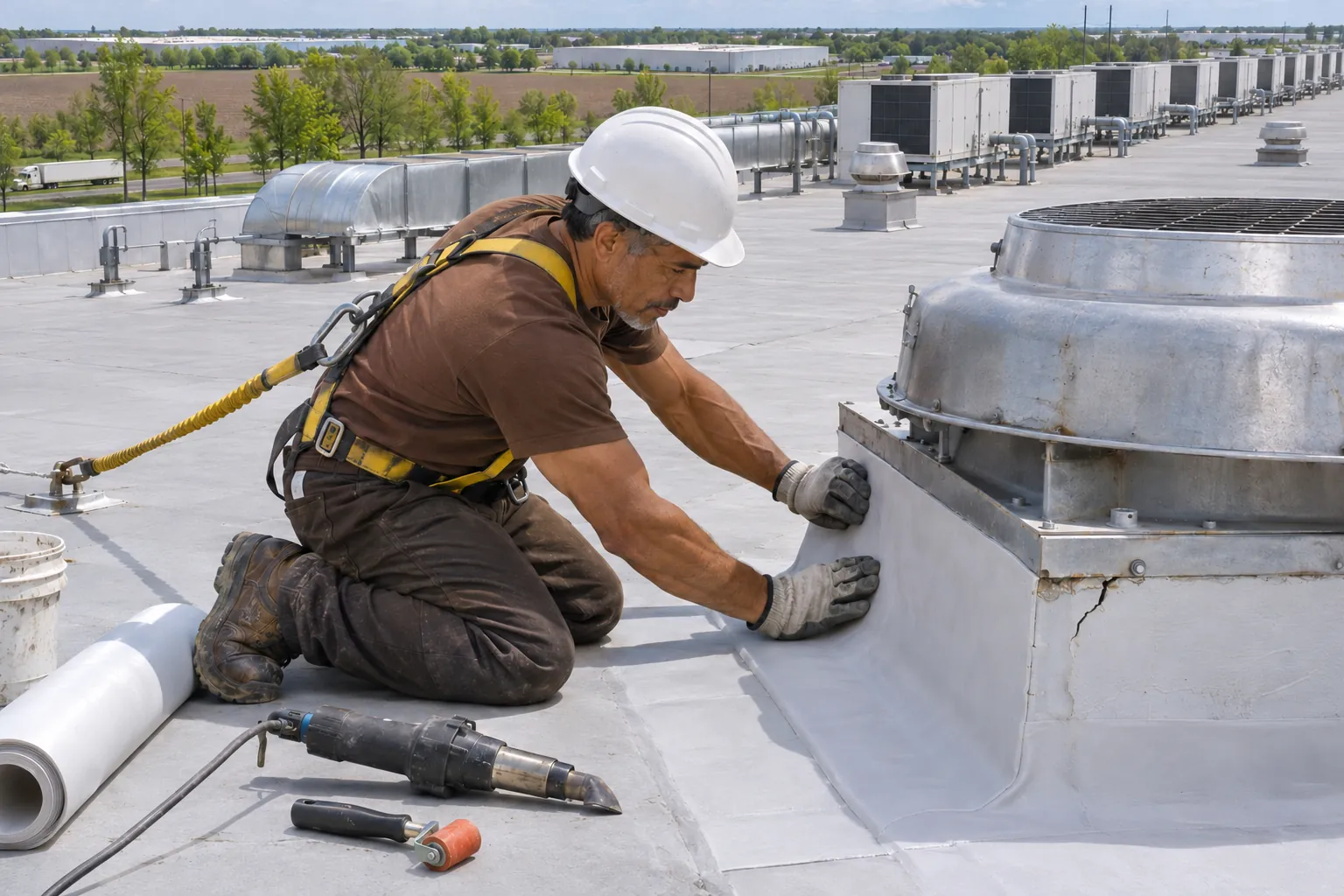
Curbs, drains, and decks on plant roofs.
Typical RepairsRepair or replace, service life, flashing, hail, and rust.
In most cases, yes. New fasteners, resealed laps, swapped panels, and rebuilt flashing handle the common leaks. Replacement becomes the better call once rust has holed panels across the roof or the framing sags.
Panel finish, steel gauge, and how often fasteners and sealant are maintained. The panels usually outlast the screws, sealant, and trim, so keeping those parts tight keeps the whole roof in service longer.
Old flashing comes off, the steel underneath is checked for rust, and new flashing goes on with fresh sealant and closures. Ridge caps, eave trim, wall flashing, and curb flashing are the usual candidates.
Usually, because dents alone rarely leak. We document the storm damage, then replace holed or cracked panels, broken skylights, and split washers, and redo any seal the hail opened.
Exhaust residue settles near stacks and vents, and debris holds water at eaves and laps. We treat surface rust early and replace panels where it has eaten through.
We walk every fastener row and check each washer by hand and by eye. Cracked or loose ones get replaced along the whole run, since their neighbors are close behind.
Yes, when the rib profile and gauge match. Laps between old and new panels get fresh sealant and stitch screws so they stay tight.
Loose ridge caps and missing foam closures let wind drive rain over the top of the ribs. New closures and refastened caps close those gaps.
Tell us the building type and where the steel is leaking, and we will come inspect it.