Rooftop Unit Curbs
Units shake their curbs loose over time. Rain then runs down the inside of the curb wall and shows up over a hallway.
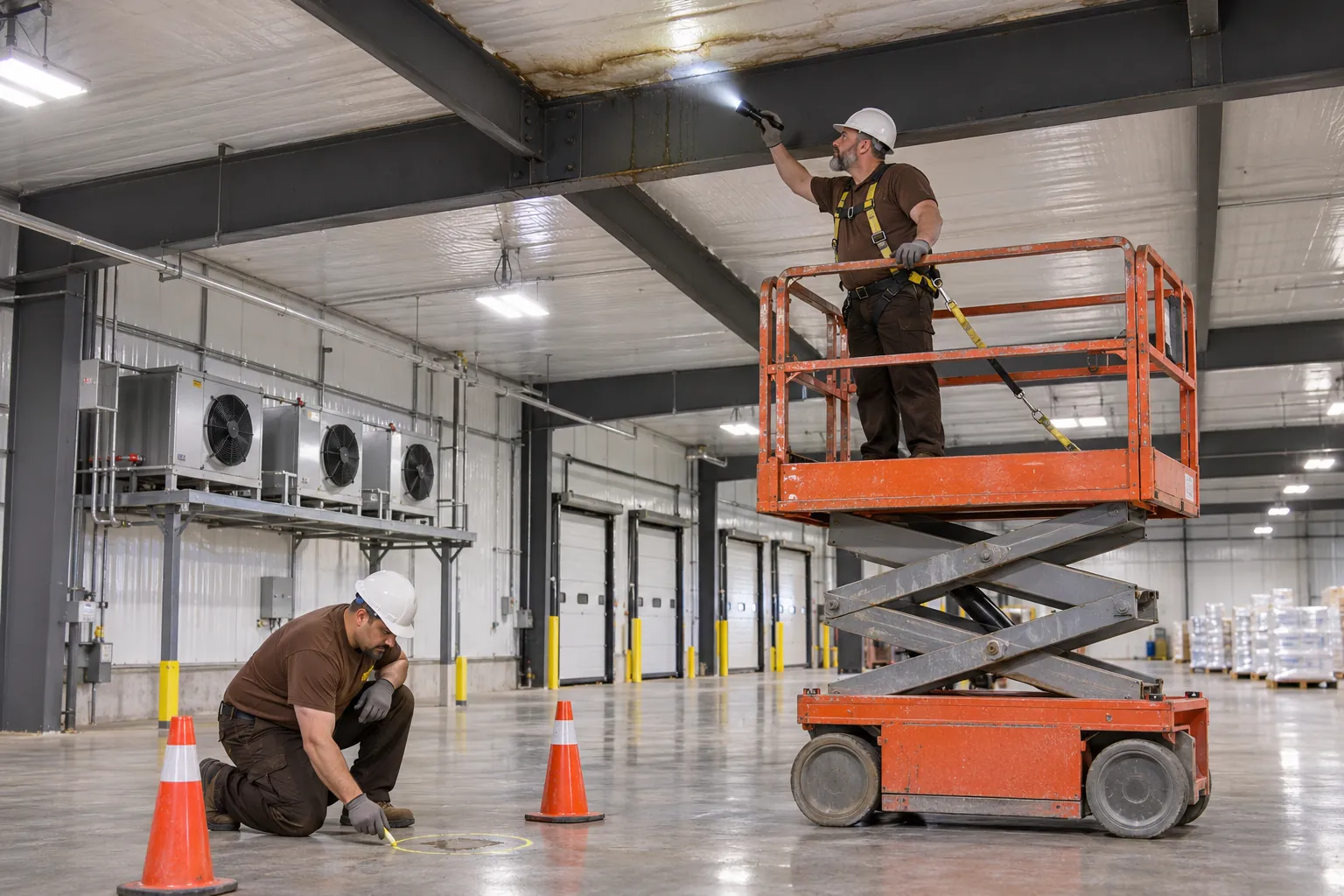
As a Plainfield commercial roof leak repair contractor, we trace stains back to the opening, then repair it in matching material.
Plainfield commercial roof leak repair starts by reading the leak itself. When and where it drips narrows down the source.
| When It Leaks | Likely Source | First Place We Check |
|---|---|---|
| Only in heavy rain | Overflowing drains or gutters | Drain strainers and scuppers |
| Days after snow | Melt backing up under laps | Parapet corners and frozen drains |
| In wind-driven storms | Open trim or wall flashing | Coping joints and rake trim |
| Any rain, same spot | A split seam or boot nearby | Curbs and seams uphill of the stain |
These six openings start most of the leaks we trace on office and retail roofs.
Units shake their curbs loose over time. Rain then runs down the inside of the curb wall and shows up over a hallway.
Rubber boots around vent pipes crack in the sun. The leak lands near a restroom or kitchen wall.
Joints in the wall cap separate, and water runs down inside the parapet before reaching the ceiling.
Frozen drains hold melt water on the roof until it backs up under the nearest lap. The leak appears days after the snow stopped.
Water entering at a seam travels along the deck and drips several feet from the opening, often in a different room.
Snow melts on a warm roof and refreezes at the cold edge, pushing water under trim and flashing.
Tracing a leak takes several methods used together.
Every stain, drip, and wet tile gets marked on a floor plan so roof work starts directly above it.
A meter run across the membrane shows where water has spread into the board below.
Suspect areas are wetted one at a time while someone watches the ceiling from inside.
Only the opening that tests positive gets cut open and repaired, in the same material as the roof.
Each row pairs a common leak source with the repair that stops it.
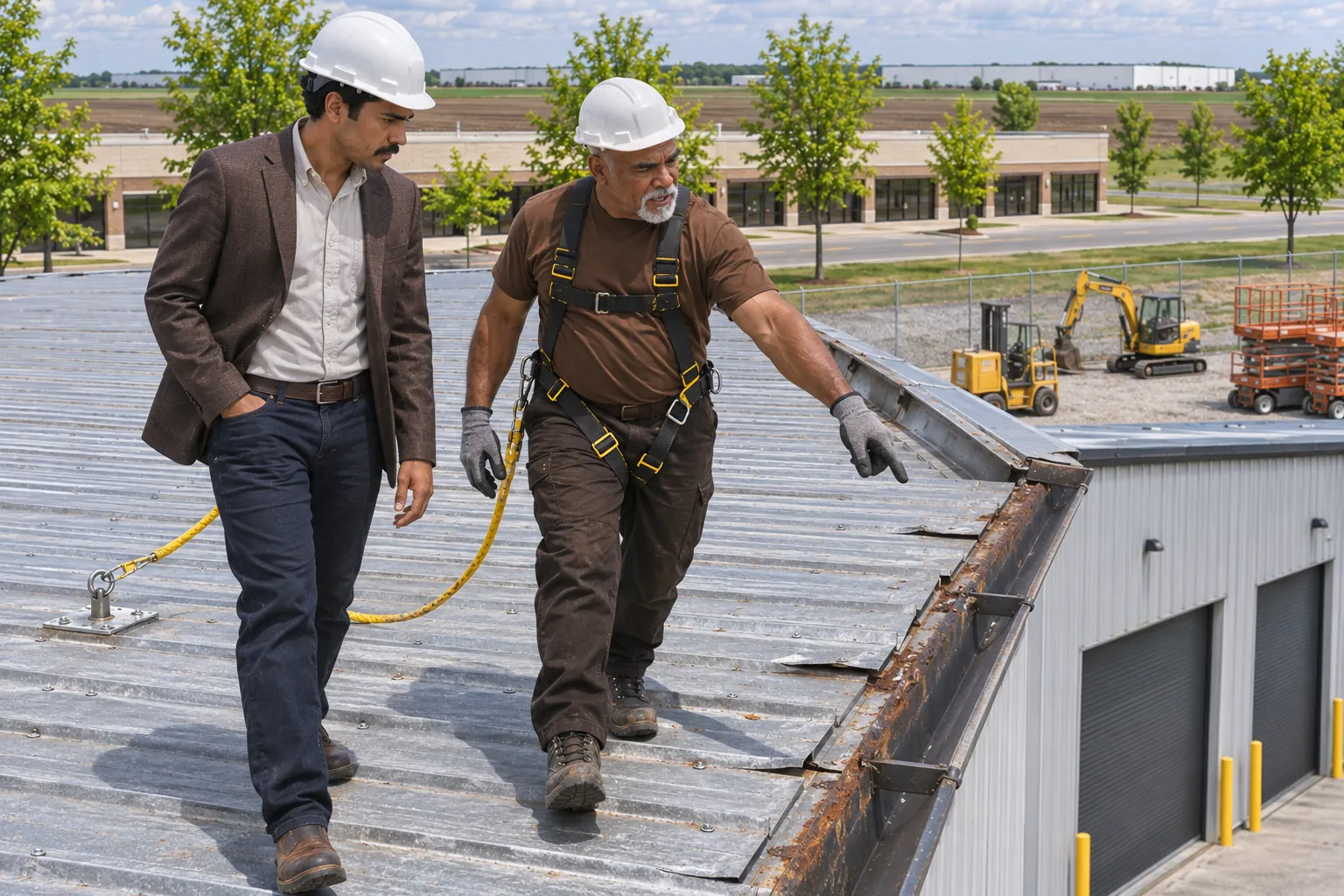
Loose flashing at a unit curb lets rain run inside the curb wall.
New flashing wraps the curb and terminates under a sealed counterflashing.
Separated coping joints let water into the wall cavity.
Joints are resealed or the coping replaced, and base flashing is reattached below.
Melt water held by ice pushes under laps near drains.
Laps near drains get sealed, and drains are cleared so the next melt runs off.
Split pipe boots drip next to plumbing walls.
Boots are replaced and sealed to the membrane around the pipe.
A repeat leak means the source has not been found yet. Call and we will trace it.
Leak work goes back and forth between the ceiling and the roof until the source is confirmed.
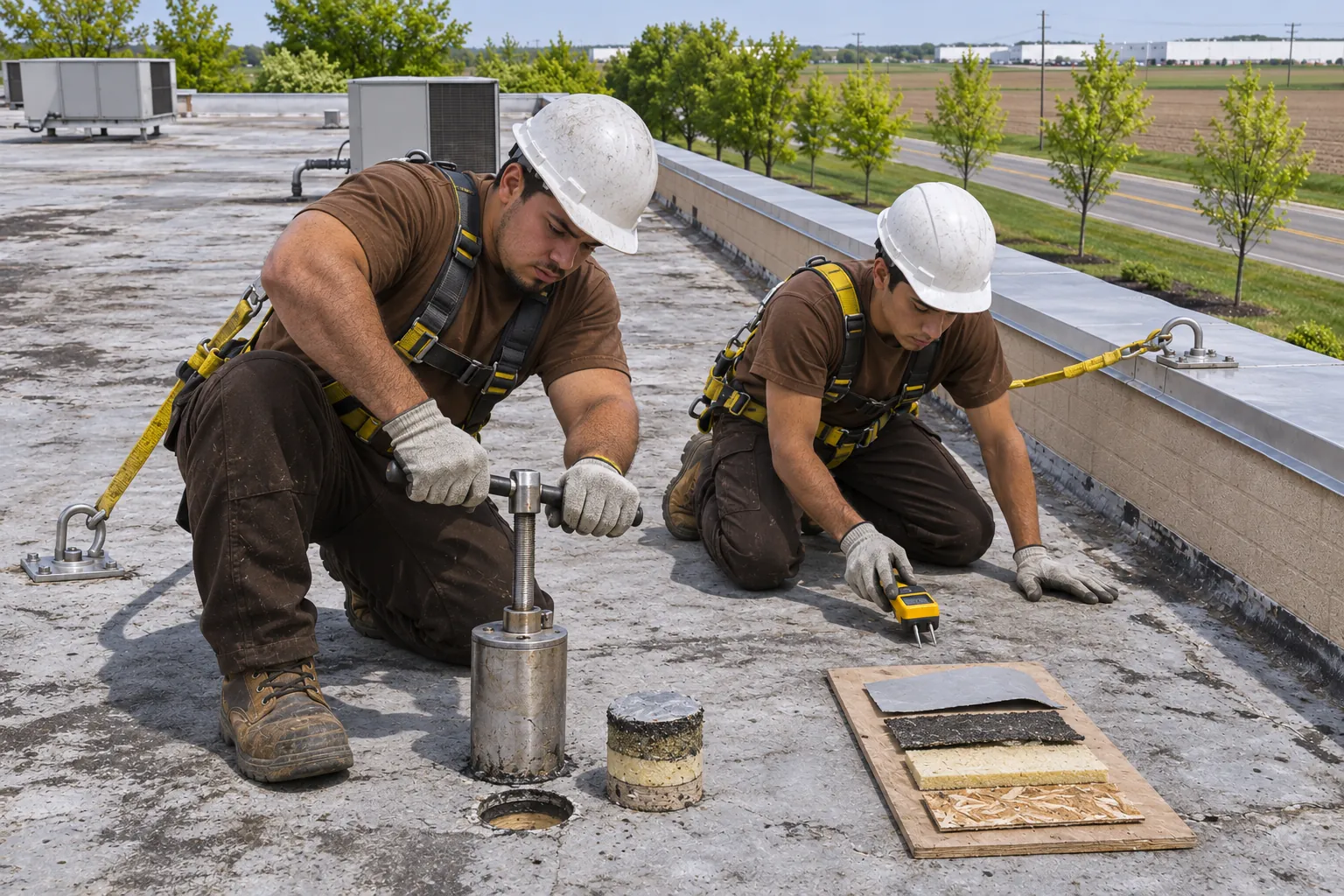
Inside, each stain and drip goes onto a sketch of the floor, with notes on when it appears.
On the roof, we start above the stain and work toward the high side, checking seams, curbs, and boots.
A spotter inside watches the ceiling while one area at a time is wetted on the roof.
The confirmed source gets cut open, dried, and repaired in matching material.
You get photos and a note naming the source, which helps owners and tenants sort out responsibility.
Once the source is known, the fix falls under one of these services.
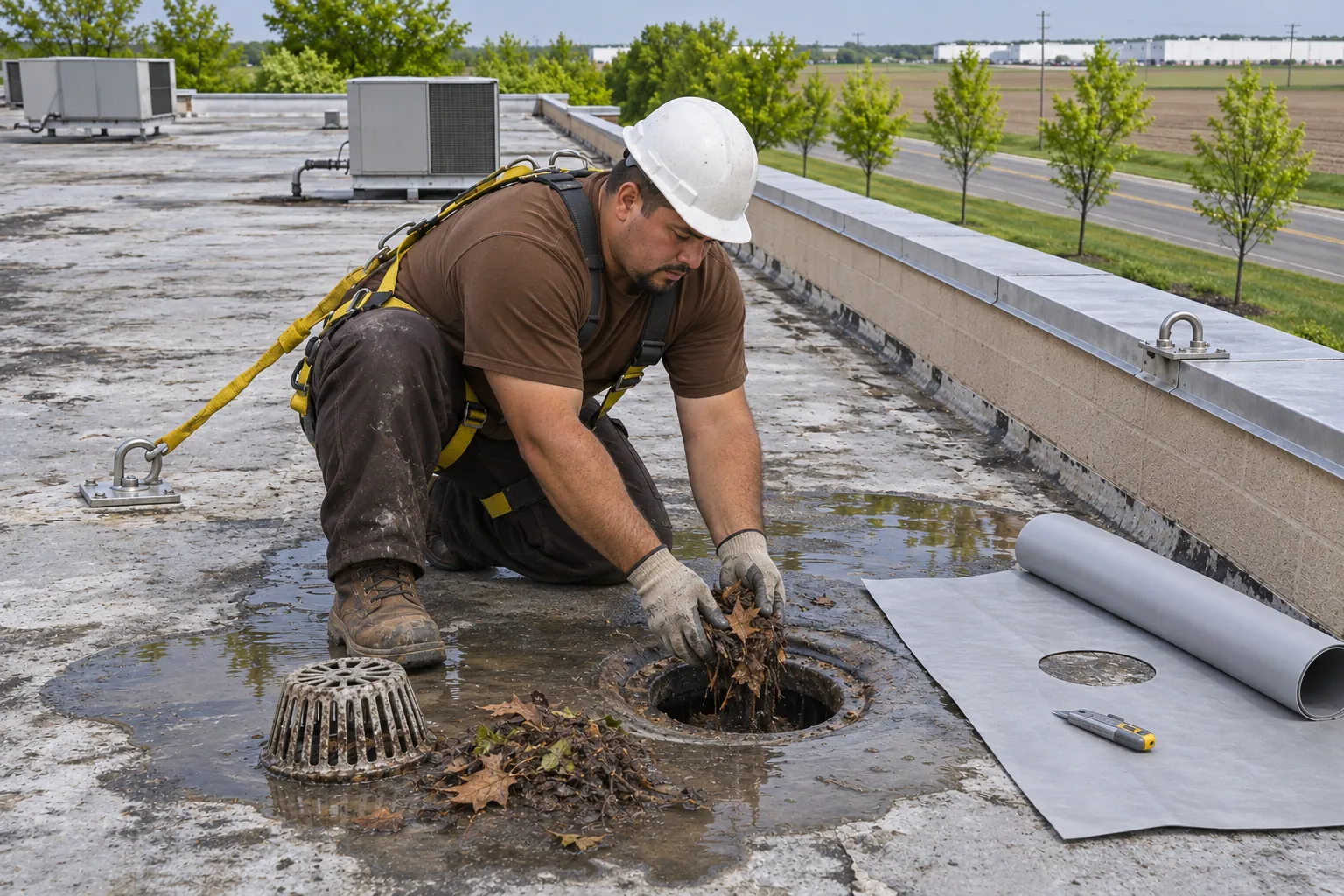
Membrane laps, drains, and blisters on low-slope roofs.
Typical Repairs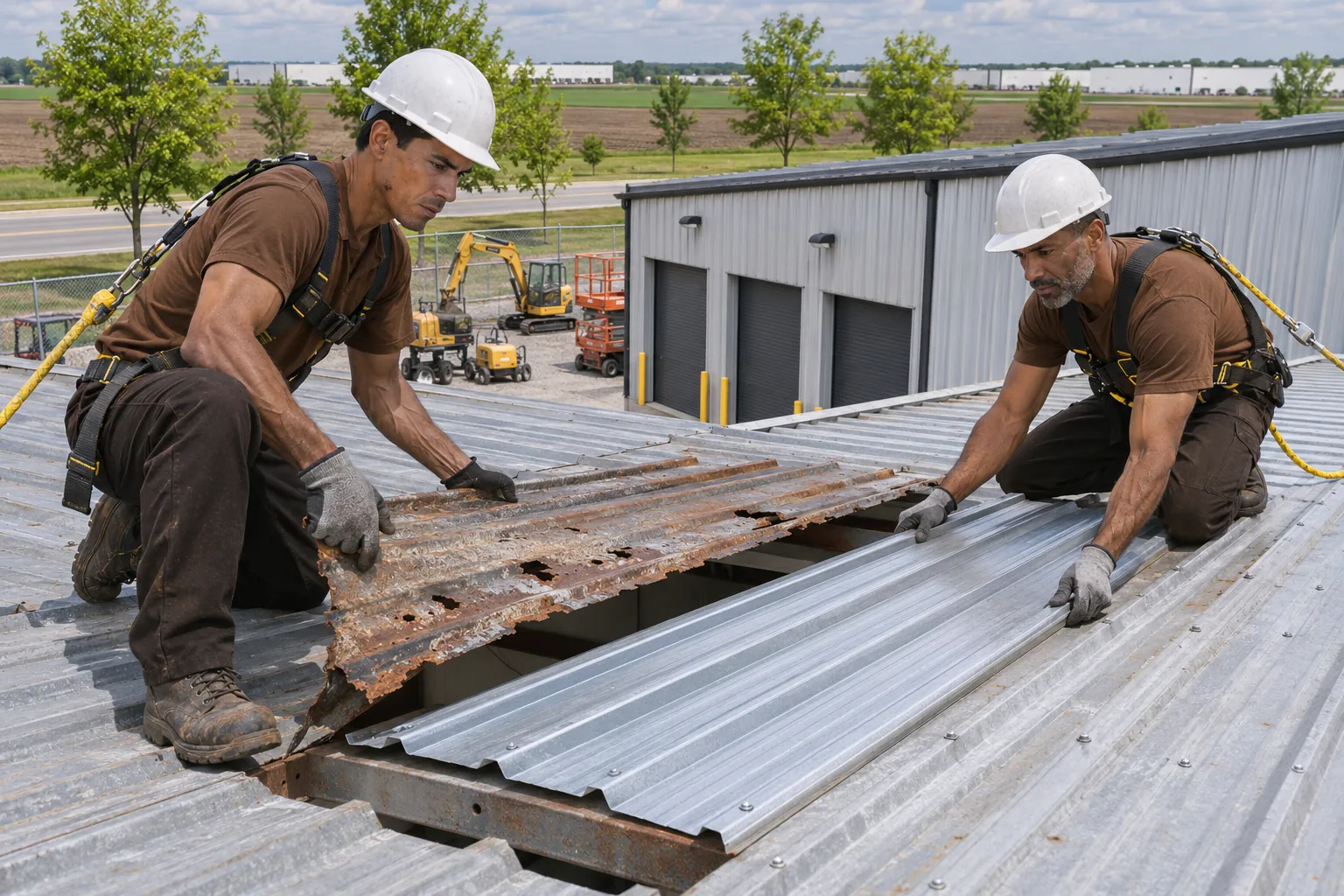
Fasteners, laps, rusted panels, and trim on steel roofs.
Typical Repairs
Curbs, drains, and decks on plant roofs.
Typical RepairsLeases, snowmelt, parapets, ice dams, and tracing.
Your lease decides it. Some put the roof on the landlord, others on the tenant, and some split the cost. Report leaks in writing quickly; our photos and notes show what failed for both sides.
Ice at drains and parapets holds melt water on the roof until it backs up under laps and flashing. We clear those drains and seal the laps near them so the next thaw drains properly.
Coping joints, counterflashing, masonry cracks, and the base flashing all get checked. Most of these leaks come from open coping joints or flashing that pulled loose, and we reseal or replace whichever failed.
Damaged eave flashing gets replaced, laps near the edge are sealed, and gutters are cleared. Where ice dams return every winter, we look for heat escaping into the roof from below.
Water travels along the deck and insulation before dripping, sometimes many feet from where it entered. That is why tracing starts at the stain and works uphill toward the high side of the roof.
Simple leaks show up in one visit. Leaks that only appear in certain storms take water testing, and sometimes a second visit after the next rain.
Every traced leak gets photos and a short written note naming the source and the repair, which owners can share with tenants or adjusters.
Often it does. Open coping, cracked masonry, and loose wall flashing let water in above the roof line, and it shows up like a roof leak inside.
Tell us where the stain is and when it drips, and we will start tracing.